Sunday, April 24, 2016

Holding Students Accountable For Their Own Learning

Cameras are like students held up by a tripod support system
which includes teachers, parents, and the student themselves!
When I think of students, I think of a camera being held up by a tripod full of support.  Most of the time in education, the teachers are looked at as the sole source of knowledge and input provided to the student.  Many people forget, that the teacher is not the only one involved.  To me, the teacher is one leg of the tripod holding the student (or the camera) up.  We forget that parents and students can also help their child succeed in education.  As a secondary science teacher, I have learned to keep parents in the loop at all times, not just for the bad, but the positive things as well. A short drive by phone call can make all the different in the world for parents, students, and ultimately teachers.  

The most important part of the tripod is always forgotten...the student.   In late elementary school and especially middle and high school, it is crucial for teachers and parents both to hold the student accountable for their own learning!  This gives them a senses of responsibility and can help build up their self esteem if done properly.  As many in the field of education move towards pushing a growth mindset, student accountability can be the first step in the process.  The teacher can model how progress, not the end result should be the ultimate goal for every student.

Right now, DATA, is a big buzz word in education.  As a teacher I was always afraid of DATA.  It made me think of endless hours creating data binders, crunching numbers, and creating spreadsheets to determine what I needed to reteach or spend more time on.  After several years in the classroom I discovered that I was missing one crucial element to the data puzzle...the student.  I learned that I needed to allow the student the opportunity to dissect their own data because ultimately they were the ones being affected, why not have them do all the hard work?  It turns out it wasn't hard work at all and the students actually appreciated having such timely feedback even if it wasn't always positive. 

Sample Student Self Evaluation Sheet
After most assessments in today's secondary classroom, the student only gets back a numerical grade, because teachers rarely have time to go through and discuss the exam and allow students time to reflect on their mistakes.  This time is crucial, because this is where the deep thinking occurs which gives the student an opportunity to relearn the concept and retain it for the future. Once I moved away from paper-pencil testing and moved towards 100% electronic assessments I decided to create "student self evaluations" especially for larger unit exams, midterms, finals, or district assessments.  In this self evaluation form I categorized questions based on concepts or TEKS and students had to determine if they got the answers correct or incorrect and then highlighted or colored in the questions they got right. Some teachers I currently work with started using a color system where red means the student answered the question incorrectly and green means that they got it correct.  This allows students to see a visual of where their learning gaps are.  I also have students reflect on the assessment and choose their top three strengths and top three weaknesses which can be relative for each student. One student's strength may mean they got 3 out of 3 correct while another student may have only gotten 1 or 2 out of 3 correct and still called it a strength.  I would take these self evaluations and create remediation stations the next day in class when the learning was still fresh and student neurons could still make proper connections.  The best part of this technique was that now the student was aware of both their strengths and weaknesses because they chose them!

Sample Student TEK Tracker
Another similar tool I created was the "Student TEK Tracker" which I am currently using with the Chemistry teachers in my district using Tango software.  Every two weeks some of our chemistry teachers give their students a short warm-up or quiz (approximately 5-8 questions) which we call mini-marks or checkpoints about TEKS previously taught.  They always coincide on Thursdays to keep with their "Throwback Thursday" theme.  Students immediately get feedback and get to shade in how they did using the red and green color code.  The following Thursday, teachers have a hands on remediation activity or mini-lab based on the weak TEKS from the previous mini-mark to reinforce the concept even further.  Teachers also create their own TEK trackers for each class or for all of their classes as a whole to see what TEKS or concepts need more attention and which ones need to be assessed again in the near future...Talk about data driven instruction!

Sample Biology TEK tracker that I created to see how all the students in my district were doing and which TEKS where hotspots to ensure teachers remediated before testing in May. 

Monday, April 18, 2016

Math Problems in Science

Many science teachers think that they shouldn't have to teach math in science class....that is the math teacher's responsibility.  But guess what...math is a science problem too!  Many of the students understand the science concepts, but get stuck when there is a mathematical equation involved, especially if it involves unknown variables or basic algebra as it does on the 8th grade science assessment.  

I got called in from one of the middle schools I work with and they asked me to work with their special populations of students (special education, ESL, and 504's)  in small groups once a week.  Based on their district assessments, many were getting low mastery on TEKS associated with math equations.  I decided to confront the math issue straight in the face and spent two entire sessions on math in 8th grade science pull-outs.  As I was working with the students I noticed six trends that were holding the students back from getting the correct answers.

1. Using the wrong equation, especially when dealing with force.
2. Not knowing when to divide or multiply when trying to separate an unknown variable.
3. Getting stuck on problems that required two steps.
4. Moving the decimal point for long division problems (since they cannot use calculators on the test).
5. Rounding to the appropriate decimal (in this case to the nearest hundredth).
6. Bubbling appropriately on their griddable responses. 

Students were very good at determining which equation to choose if it had the keyword in the problem (i.e. work, speed, or density) which gave them a clue which equation to use. The problems arose when we needed to find force. They would automatically pull out the force equation but where getting stuck because mass or acceleration wasn't provided. The students did not make the connections that some variables such as force and distance where part of multiple equations.  

So I decided to create a 4 x 4 activity where they could see this visually.  Each student created a flash card with the keyword on one side and the known equation on the back which is also already provided on their reference sheet. Then I gave students a stack of 16 small cards: 14 which were words, in this case, variables from each of the four equations and 4 which were pictures (for the learners who need reinforcement through visuals).  The students needed to lay the variables for each equation and the picture above the matching equation on the flashcard which they had created like so.

4 x 4 Math Equations in 8th Grade Science
Once students could see all variables, they could manipulate them much easier and the algebra was no longer as confusing since we took the numbers out of the equation (no math pun intended)!  Now they could see that if you were using distance or force, there might be two equations to choose from instead of just one.

My next obstacle was getting the students to understand when to divide and when to multiply using the equations and the variables provided in the question.  Many science teachers teach their students about the triangles.  So I reinforced this concept in my science pull-outs by incorporating them into my equation foldables.  Students used construction paper to create these arrow like foldables for each equation (density, force, work, and speed) and inside we created a triangle for each using the slogans our teachers use to remember the order such as "Falcons Must Attack" for the Force, Mass, and Acceleration equation.  You can see inside each foldable below there is a triangle that corresponds with that equation. I also made empty general triangles (shown in green) so we could use the 4 x 4 cards mentioned above and manipulate each variable as needed depending on the equation being used.  This helped the students determine whether they needed to multiply or divide depending on the variables provided in their specific problem.

Reinforcing Math Through Foldables, Triangles, and Griddables
The last few math problems can be solved with lots of practice.  We practice bubbling (as you can see on my griddable scantrons for pull-outs...no multiple choice answers here!) time and time again.  All of our problems are griddables!  The students complain....yes, but there is no other way to get them to practice their rounding and their bubbling.  We also practice long division and short tricks such as getting rid of unnecessary zeros or moving the decimal when needed to ensure they are confident with their math skills in order to have success on their science state assessments.  


Take the time to understand why your students are having trouble with math in your science class.  Collaborate with your fellow math teachers and see how they teach their students these concepts.  You can use what they teach and reinforce it in your science class.  It will be a win-win situation for both science and math.  Let's ensure that all of our students are understanding, not only the science, but also the math behind it!

Wednesday, March 30, 2016

Teaching Gypsy


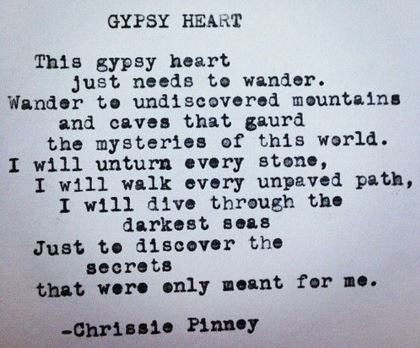
When you look up the word gypsy in the dictionary it states, "a person held to resemble a gypsy, especially in physical characteristics or in a traditionally ascribed freedom or inclination to move from place to place (www.dictionary.com)."  When I look back at my short career in education, I can without a doubt affirm that life has transformed me into a teaching gypsy.


I started off my career in education when I was working on my master's at Texas A&M University. My mentor professor, Dr. C. Marshall, was going to be out and he asked me, his first year graduate student, to lecture his Natural History of Vertebrates class on the evolution of the kidney.  I spend hours going over my lecture, taking notes, adding examples, and prepping for my big showcase.  The day of the lecture I was in the lecture auditorium at the podium while the power point was being displayed and I gave freshman college students about an hour and a half lecture on kidneys. Who knew I would eventually get so excited about teaching kidneys! I was on a personal high and it was that moment in time that I decided a career in education was definitely in my future.


After receiving my master's I moved to Miami.  Since then I have been blessed with many educational opportunities, or what I like to call, steps in my educational journey.  In Florida, I worked as a science coach at Homestead Senior, mentored freshman students through the IMPACT Miami Science Museum summer  program, taught Integrated Science and Biology at Somerset Academy where I became the science department chair, Earth Day coordinator, and Fairchild Challenge sponsor.


My next adventure brought me back to the sweet state of Texas.  I worked as the Biology PLC leader at Stafford High School and ran the school science club.  During my summers off, I mentored students in the DREME camp and learned about medical genetics at MD Anderson.  My gypsy nature then brought me back to my alma mater, Bellaire High School where I worked with an amazing set of science teachers.  Here I perfected working with ESL students in science and I learned what a true PLC, or professional learning community, was all about.  My class expectations were also increased as I taught truly rigorous PAP classes. I also became part of the technology Power Up Teacher Leader Corps since Houston ISD was piloting 1:1 in many of its high schools.  Here my passion for technology was awakened.


I received an opportunity to take on a magnet coordinator position at East Early College High School in Houston and stayed in that position for half a year until my husband's job moved us back to my birthplace, little old Brownsville.  I finished off the year teaching Aquatic Science and Anatomy and Physiology at Veterans Memorial until Los Fresnos offered me the district's secondary science strategist position which is where my gypsy heart has happily landed.

10 paper cranes for the 10 educational journeys throughout my gypsy teaching career.

Last week I was reflecting back on my educational journeys throughout my year in education and I made a paper crane for each of the ten educational journeys that have made me who I am today.  Although I LOVE my science strategist position at Los Fresnos, who knows where the wind will blow me next as my teaching gypsy adventures continue...


A short video tutorial if you are interested in making your own paper cranes to reflect back on your educational journeys.


Friday, March 11, 2016

Teaching Is In My DNA

DNA Model Student Projects
I was interviewing for my first real, full time teaching position after I completed my Master's degree.  One of the first interview questions the principal asked me was, "So, Mrs. Guzman, why do you want to teach?"  I thought for a few seconds and my natural response..."Teaching is in my DNA."  She told me that was the perfect answer, and although it is a perfect answer, in my case it really is true!

Both of my parents are educators at heart.  My father taught secondary science and then became a lawyer, but now works as the school board attorney for one of the largest school districts in South Texas. All of my father's sister's are teachers and my paternal grandparents were both teachers as well.  My mother started her career in education as a math teacher over twenty years ago.  She later become an elementary school counselor, then an assistant principal.  She recently retired, but is still involved in education by supervising new teachers involved in an alternative certification program.  Luckily, my entire life, I have been surrounded by excellent educators so teaching came natural to me.
Modeling my DNA earrings
created by one of my students

I always had my high school students complete a Careers in Science project. My students would always ask why I am a teacher, since the pay is so minimal and we have such a difficult job.  My answer to them is always, because of YOU (the students).  My students keep my fire for education burning and they inspire me to be a lifelong learner. I actively look for professional development opportunities for myself since I always strive to do better.  I want to ensure I am providing them a strong science foundation that will help them in the real world and hopefully inspire them to love science as much as I do. I hope this personal drive to keep moving forward as an educator is reflected back to the students and teachers I have worked with in the past, currently work with, and will work with in the future.  

To all the educators out there, think about what keeps your internal fire burning for education?

Science Teacher Student Career Project

Monday, March 7, 2016

Diving Into the Blogging World!


Hello!  My name is Alejandra Guzman and I have been an educator for almost eight years now.  I have taught middle and high school science in five different school districts and I have a passion for both science and technology.  Today, I decided I was going to take a risk and finally dive into the world of blogging!  I feel like the little girl in the picture above, excited but a bit nervous about how this experience is going to be.  I hope to share useful information to other educators about new teacher support, the easy integration of technology into the classroom, professional development, empowering teachers, and much much more in the realm of education.  Grab a snorkle and some flippers and join me in my new blogging adventures.